
Redesigning the map for integrative oncology: come and join the excitement in September
I've spent thirty 'reclaimed' years working towards a more holistic approach to cancer, encouraging patients to champion their own recovery. Now it's being talked about in the cradle of UK academia.
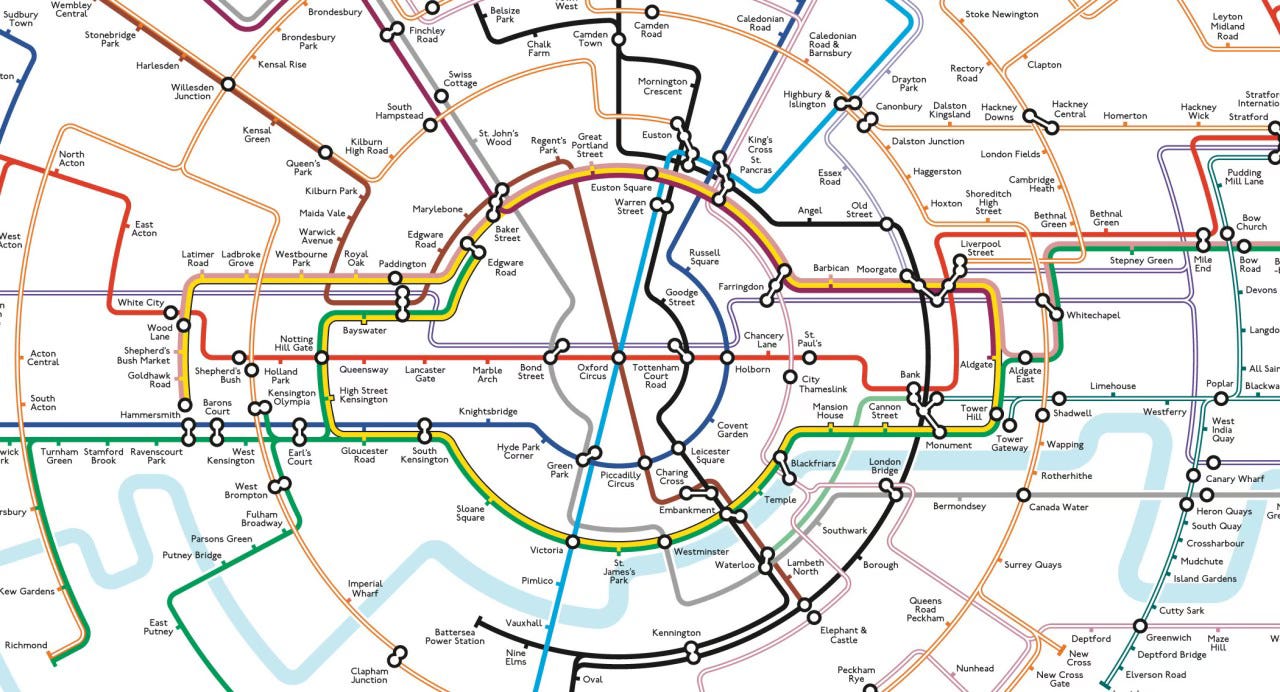
I have always had a tendency to look at the world from a slightly different angle to my peers, and had a great fondness for other people who do the same.
For example, this map of the London Underground, designed by cognitive specialist, Maxwell Roberts (not to be confused with Robert Maxwell) had instant appeal for me when he first released it in 2013, and my respect for him grew again in 2024 when he revised it based on his updated knowledge. The first edition was eye-catching, quirky and original; the second solved many of the problems inherent in the first and was even more beautiful. Like many visionaries, Roberts learned a lot from his first circular iteration and used what he’d learned to design a better version. Luckily, no one was using his map to plan the train timetables so the risk associated with some of the routes being a bit out of proportion and some of the stations being in the wrong places was not high.
I love this quote:
Overall, I’ve learnt how to design circles maps, and I’ve learnt not to trust internet excitement: hard, objective data are always necessary when judging the effectiveness of a design, and I’ve learnt to be cautious in advocating radical departures from tradition. However, one of my stances is that every city is different, and one important task, when creating a map, is to identify the design rules that are most compatible with the actual structure of the city and its network.
- Maxwell Roberts
It’s a statement that could have been written to describe patient-centred integrative oncology. We could learn a lot from Roberts and his openness to experiential learning. When risks are relatively low, we don’t have to wait for everything to be proof perfect so that we can proceed with cast iron confidence, we can create something that is good enough, and learn how to improve it along the way. All academic disciplines start this way and integrative oncology needs to start from the same place. This conference, taking place at The Mathematical Institute at University of Oxford, is an important step in the right direction. I’m excited to be part of the conference programme, presenting a nutritional case study that will look at the importance of supporting recovery.
Tickets are free for cancer patients and their carers and you can get them at the link below.
Every single oncology patient carries a map in their head, a record of the journey through the cancer process. It differs from one individual to another but it’s always more than a medical experience. I’ve never met anyone who gets through cancer unchanged - a change in alcohol consumption, a daily walk, a focus on sleep, a new career… there is always something they do differently, and it’s part of the healing.
But I’m lucky: the cancer patients I meet are always the motivated ones - the ones who are sufficiently tuned into themselves and their instincts to factor their own prompts and feelings into the equation, as well as their doctor’s. In my practice I was often preaching to the converted, people who already knew that diet and lifestyle were involved in the survival equation and who were looking for guidance. These people were blessed to have been empowered in some way to trust themselves, they didn’t need a doctor to give them permission. But many still do. Many people hang off every word of their medical team so it’s vitally important that the medical team is fully invested in their survival, and has the multidisciplinary support to help patients put it into practice.
It’s time to recognise the multifactorial aspects of cancer survival.
Last week I wrote about the gap in cancer treatment provision and the lost opportunity to help patients rebuild their health when treatment ends. I argued that we shouldn’t view the end of treatment as the end of the cancer journey but as the beginning of the process of regaining metabolic health.
This week I celebrate my thirtieth year of survival of grade 3, stage 3, hormone negative breast cancer which I found only because of the lump in my lymph nodes. My doctor told me to go home and not worry about it, but my instinct told me otherwise. My daughter was two and a half and I’m grateful every day for my tenacity in not letting that one drop. When I booked another appointment the following week my doctor (whom I had known since my early teens) actually said to me, ‘You’re not going to let this one drop until you’ve seen a consultant, are you?’ To which my answer was, thankfully, no.
While the health care I eventually received still gives me a warm fuzzy feeling in my tummy – my lovely surgeon, witty oncologist and compassionate nurses made the process as pleasant as could be – there was still a huge gap in the service I received: not only at the point of diagnosis but also on the road to recovery. I wouldn’t be here without a scary level of self-advocacy at every stage, and I’m keenly aware that not all patients are prepared to be as insistent as I was. In the twenty years that I worked as a nutritional therapists to support patients going through treatment and beyond I heard some shocking stories of patronising put downs delivered to patients who were concerned about diet and lifestyle; stories that made my toes curl and my anger flame.
As a result of my experience I have dedicated my life and my energy to making a difference in the world of cancer. Sometimes I wonder if I’ve told my story too many times but I also know I won’t be able to let it go until it can’t happen again. For that to happen the system needs to change from the inside out.
So I was beyond delighted to receive an invitation to contribute to a brand new integrative oncology conference that feels like the beginning of that process. Thanks to the extraordinary vision and tenacity of Dr Nina Fuller-Shavel and Dr Penny Kechagioglou the relatively newly formed National Centre for Integrative Oncology is hosting its first Annual Conference at the University of Oxford - with a gala dinner at the Ashmolean Museum. A grand location to hold a grand idea, the fabulous programme is an exciting mix of the conventional and the complementary, with a refreshing focus on the value of lived experience.
For healthcare professionals, there are five grand rounds spanning neuro-oncology and prostate, ovarian, non-small cell lung and breast cancer, bringing multidisciplinary input and lived experience voices to the same table. Supporting these talks you’ll find a smorgasbord of workshops on herb-drug and supplement interactions, prescribing exercise oncology, oncology acupuncture, mistletoe therapy, perioperative and radiotherapy support, integrative oncology nursing, integrative oncology in primary care, cancer-related fatigue, clinician wellbeing and burnout, and case-based nutrition reasoning.
For people affected by cancer, and for their families and carers, there is a fantastic parallel programme with its own dedicated lecture theatre and its own workshop room, covering important topics such as talking to your medical team about integrative approaches (Yay!), the value of movement and creative arts in cancer support, acupuncture and acupressure, scar therapy and lymphoedema management, with additional practical experiential sessions for yoga, breath work, tai chi, qigong, clinical hypnosis and EFT.
Integrative oncology doesn’t get more exciting than this.
There are free tickets available for cancer patients and their carers and the organisers are still open (until 16 August) to late abstract submissions if you would like to be part of this ground-breaking event. https://lnkd.in/eNzFw5E6. Conference information and tickets are available here: https://lnkd.in/e6emYB4P
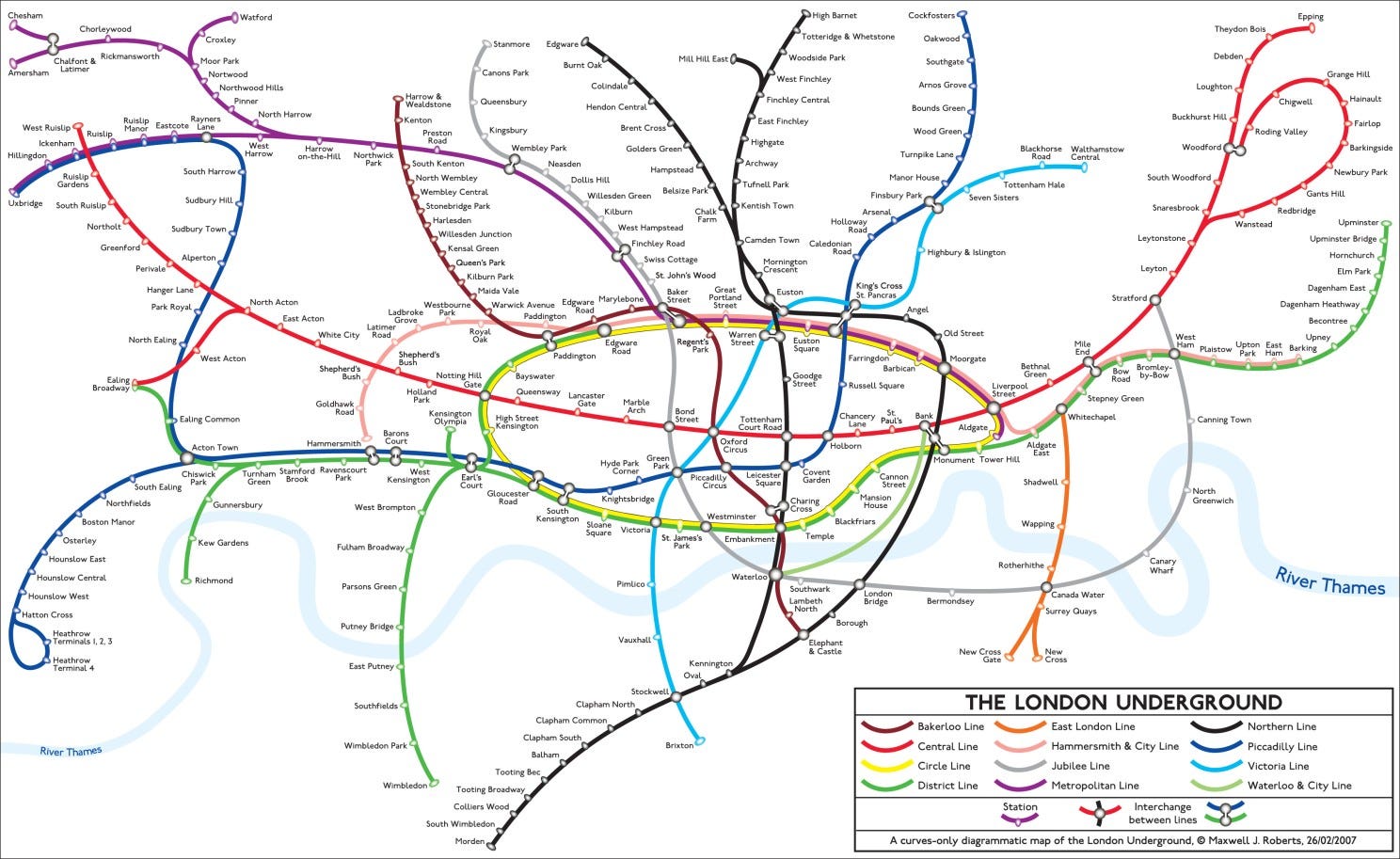
This was an even earlier version of the map that Roberts abandoned. It didn’t work but no one died. And you can see the origins of the later version here, even though the whole project is still a work in progress.
If we had started to embrace integrative oncology in 1997, the conferences would probably have lasted only for an afternoon rather than a weekend, but they would have been formative. The science would have been sketchy back then but the learning by now would have been huge. More importantly it’s likely that a few more mums would have been around to watch their daughters grow up.


FIND A PRACTITIONER
If you are interested in learning more about the metabolic approach to cancer you can find a Fluxable Practitioner here.
SAFE AND SOUND SUPPLEMENTS
I buy my supplements from the Natural Dispensary. You can use my promo code, SuppStack, to claim a 15% discount. I get commission but I share most of it with you!
RELIABLE & RELEVANT NUTRIGENETIC TESTING
If you are a practitioner looking for a reliable source of nutrigenetic testing and education I recommend Lifecode Gx – and if you are a patient looking for nutrigenomic support you can find a Lifecode Gx trained practitioner above.
MORE HELP WITH INTEGRATIVE ONCOLOGY
With more than twenty years of heroic effort to connect cancer patients to the information they need, the Yes to Life charity exists to guide you through the confusing options for care, fuelled by their determination to put the love back into oncology. Their site is overflowing with resources - don’t miss it.

The more we understand cancer, the more we see lots of different ways to change disease outcomes. The right plan for you will be designed around your diagnosis, your health history and your personal circumstances. It starts with getting the right medicine - not too much, not too little, just enough. And then it’s important to make diet and lifestyle choices that work in synergy.
Although I am very knowledgeable about cancer I am not a doctor and nothing I say or write is intended to diagnose or treat cancer. I am a firm believer that everyone who thinks they might have cancer needs to see a doctor and that, for most people, medical treatment is an essential part of recovery.
This site exists to share information and education about integrative oncology - the aspects of diet and lifestyle that may be able to support you before, during and beyond your treatment. The information is not intended to replace any cancer treatments or medical advice.
It is particularly important to understand that nutrition can be a powerful healing force. For that reason it also has the potential to undermine some of your medical treatment aims (which may include trying to kill cells rather than heal them). Please discuss any nutrition programmes, and especially any supplements, with your medical team.
Ask them for evidence of any contraindications and adverse interactions between what you are planning and what they are planning. Don’t be deterred by eye rolling. If your oncologist is not able to understand your need to do something to help yourself, find another one. There is plenty of evidence that diet and lifestyle are important.
There is no doubt that metabolic therapy can improve outcomes and we are learning that mind-body approaches are helpful to. Congruence is key. It’s vitally important that you feel happy and hopeful with your oncology protocol and that you are all working towards a healthy future together with all of your practitioners. Don’t settle for less.
If holistic and future-focussed collaboration is not available from your oncologist then I urge you to look further afield. Change to a different oncologist if you can, or stick with the oncologist you’ve got and find an integrative practitioner who understands your needs and can support you holistically. Whichever way you choose you can find a wide range of resources at Yes to Life.
Finding the right practitioner takes courage and effort at a time when your energy may be low, and it can make you feel as though you are being an awkward customer when everyone is doing their best to help you. But if ever you needed to advocate for yourself this is it: be respectful, talk to experts, ask questions, listen to the answers, stay curious, don’t be gullible- or intimidated. Do a bit of well-chosen reading around the subject, enroll your intuition, and get stuck in!
Hope is a vitally important of the equation. It sounds pedantic, but there is no such thing as ‘false hope’. Hope isn’t a fact, it’s a feeling; one that changes the molecules in your brain and pulls you towards a brighter future.
Congratulations on your thirtieth year of survival and the inspiring use of that life !
This is very exciting. Are you going to the dinner? I am going to try to get to everything. X