Minimise Treatment Side Effects
This week we discuss strategies for managing the side-effects of chemotherapy without undermining your treatment goals.

Any post about cancer treatment needs to acknowledge that the only person legally licensed to give you advice about cancer treatment is your oncologist. This post is designed to support you through the ordeal and help you manage the side effects of the drugs you are given. The key is to understand what the drugs are trying to achieve, and how they exert their effects in the body. With that knowledge we can hold twin goals of reducing the damage they do at the same time as potentiating their activity.
One of the ways chemotherapy works is to kill cells in the process of cell division. Since most healthy adult cells divide infrequently, the drugs therefore preferentially target frequently dividing cancer cells. However, we do have other fast-dividing cells in our bodies - those that line the digestive tract, our hair follicles, bone marrow and immune system - and these are also affected by the treatment, causing some of the unpleasant side effects.
But that’s not the only reason we suffer after chemo: your system will also be dealing with cell debris from billions of damaged cells. Large scale necrotic cell death sets off a massive inflammatory cascade, triggering a reciprocal DNA growth response to replace lost cells. The drugs tend to work by increasing oxidative stress inside the target cells, and by inhibiting the use of folate (Vitamin B9) for cell replication. They are, of course, highly toxic and must be broken down in the liver and digestive tract, and then eliminated. Then steroids, routinely used to buffer cell damage, irritate the stomach, raise blood sugar, induce sugar cravings, impact mood and cause insomnia. Meanwhile, your microbiome also suffers wholesale liquidation.
So after a cycle of treatment your whole system will be inflamed; your digestive tract will be damaged and probably leaky (a further source of inflammation); your kidneys and liver will be working hard to deal with drug and metabolic debris; your red and white blood cell population will be depleted, causing fatigue, and problems to dealing with damaged cells and pathogens; and you will probably have a functional deficiency of folate and other nutrients. At the same time, your metabolism will be going into overdrive to repair the damage and replace lost cells fuelled by artificially high blood glucose.
That’s a lot to deal with.
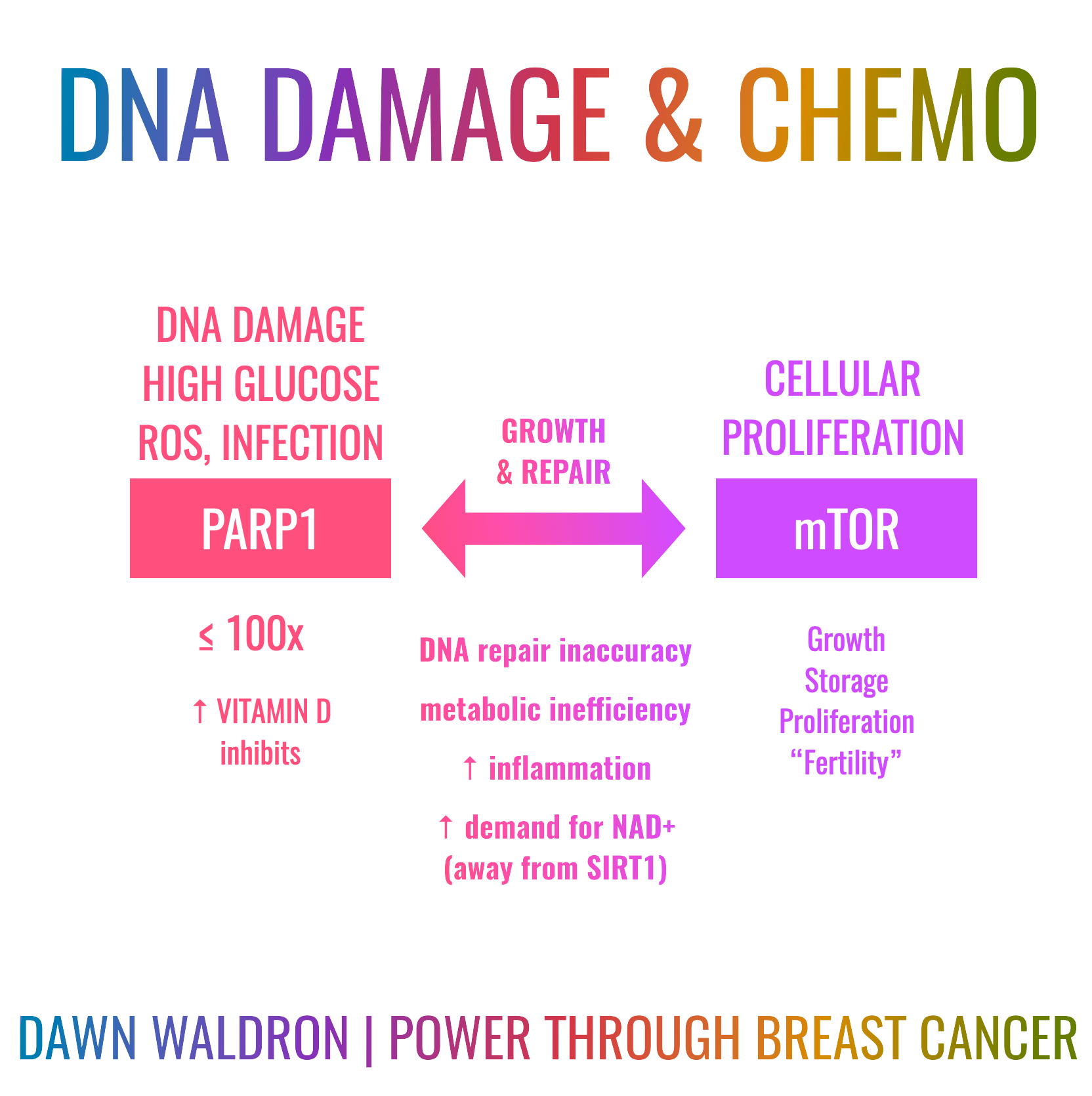
With all this going on, it’s not surprising we feel so ill. Chemotherapy subverts so many of the body’s normal mechanisms and patients often feel like they are ‘not themselves’. Certainly the cocktail of drugs and steroids combined with the cell damage and immune response can lead to some pretty out of body feelings. As you can see from the diagram below, the collateral damage tends to activate genes in charge of growth and repair which can, of course, undermine the aims of chemotherapy.
So how can use nutrition to mitigate some of the downsides?